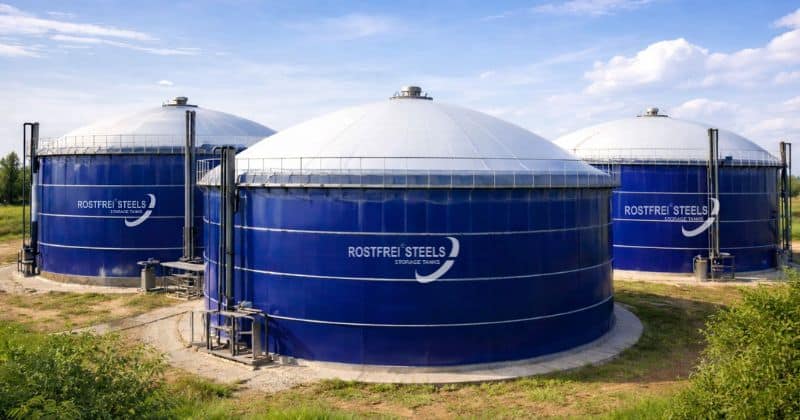
Premium
Glass Fused Steel Tank
GFS tanks represent premium technology combining the strength of steel with the corrosion resistance of glass — ideal for water, wastewater, and industrial storage.
Read More →Modular or bolted steel tanks are widely used across industries for storing a variety of liquids, including fire-fighting water, potable water, rainwater, wastewater, mild chemicals, and process fluids. Their widespread adoption is mainly due to advantages such as modular construction, quick installation, scalability, and ease of transportation. However, one crucial element that often gets less attention is the RCC (Reinforced Cement Concrete) foundation, which ultimately determines the success and long-term performance of the installation.
Even a well-designed and precisely manufactured bolted tank cannot perform as intended if it is placed on a poorly designed or improperly executed foundation. In fact, many early-life failures—such as leakage, shell distortion, bolt loosening, and gasket damage—can often be traced back to foundation deficiencies.
This article highlights why a properly engineered RCC foundation is essential for bolted tanks, how it influences structural safety, operational reliability, and service life, and what key design and construction practices must be followed.
An RCC foundation is a reinforced concrete base designed to carry the full load of the tank system. It serves as a stable interface between the tank and the ground, providing resistance against overturning, sliding, wind forces, and seismic effects.
Unlike basic PCC or earthen bases, RCC foundations offer higher strength, durability, and reliability. They are typically constructed with a pocketed arrangement to allow anchoring of the tank using mechanical or chemical fasteners.
After installation, the base is sealed using specialized cementitious materials and industrial sealants to ensure long-term stability and leak prevention.
Self-weight of steel components and accessories
Hydrostatic load from stored liquid
Operational and maintenance loads
A properly designed RCC foundation spreads these loads evenly into the soil. Without this uniform distribution:
Differential settlement may occur
Bottom plates may deform
Bolts and gaskets may be unevenly stressed
Over time, this can lead to leakage and structural deterioration.
Uneven settlement is one of the most common causes of bolted tank failure. If different areas of the foundation settle at different rates:
A well-engineered RCC foundation minimizes such movements and preserves the tank’s geometry throughout its service life.
Tall or exposed tanks are subject to significant wind actions, including:
RCC foundations provide the necessary mass and rigidity to counter these forces. Embedded anchor bolts further secure the tank structure, preventing uplift or sliding during high wind events.
In earthquake-prone regions, tanks experience dynamic forces caused by ground motion and liquid sloshing. These forces act in multiple directions and can be severe.
Support for Anchor Bolt System
Anchor bolts are critical for resisting uplift and lateral forces. RCC foundations allow:
Weak or poorly constructed foundations can lead to anchor failure under extreme conditions.
Compliance with Standards
RCC foundations for bolted tanks are typically required by major design codes and standards such as:
Advantages:
Applications:
Fire water tanks
Potable water tanks
Chemical storage tanks
RCC Ring Wall Foundation
A circular RCC ring supports only the tank shell, while the interior is filled with compacted soil or PCC.
Advantages:
More economical for large diameters
Efficient load transfer through shell
Limitations:
Requires good soil conditions
Less suitable for very heavy tanks
Key Design Considerations
Soil Investigation
A proper geotechnical study is essential to determine:
Safe bearing capacity
Soil composition
Groundwater level
Design assumptions must always be based on actual site data.
Load Analysis
The foundation must consider:
Full and empty tank conditions
Wind loads
Seismic forces
Combined load cases as per design codes
Flatness and Level Tolerance
High precision is required:
Typically within ±3 mm across diameter
No abrupt surface irregularities
This is critical for proper tank performance and leak prevention.
Concrete Quality and Reinforcement
Common specifications include:
M25 or higher grade concrete
Adequate reinforcement cover
Crack control reinforcement detailing
Poor workmanship can lead to cracking and long-term durability issues.
Curing and Strength
Tank installation should only begin after:
Achieving required concrete strength
Proper curing period (14–28 days, typically)
Premature loading can permanently damage the foundation.
Common Issues from Poor Foundations
Leakage despite correct tank installation
Frequent bolt tightening
Shell misalignment and distortion
Uneven settlement and cracking
Reduced operational lifespan
Often, correcting foundation defects is far more expensive than proper initial construction.
Best Practices
Follow approved structural drawings strictly
Ensure correct reinforcement placement and shuttering
Maintain strict quality control during concreting
Verify dimensions and level before tank erection
Conduct joint inspection with the tank supplier
Conclusion
An RCC foundation is not just a supporting civil structure—it is the structural backbone of a bolted tank system. It directly affects safety, durability, performance, and compliance.
A well-designed and properly executed foundation:
Prevents premature failures
Ensures leak-free operation
Extends service life
Improves safety under extreme conditions
For any bolted tank installation, the foundation deserves the same engineering attention as the tank itself.
In today’s fast-paced industrial environment, cold storage facilities have become a vital component for businesses handling perishable and temperature-sensitive products. Whether it’s preserving fresh food, storing life-saving pharmaceuticals, or protecting specialty chemicals, these temperature-controlled facilities play a critical role in maintaining product quality, streamlining supply chains, and ensuring operational efficiency.
At Rostfrei Steels, we recognize that robust and reliable infrastructure is essential for the success of any cold storage operation. The choice of structural system—whether incorporating pre-engineered building (PEB) components such as cladding, purlins, and steel frames or utilizing conventional construction methods—directly influences insulation performance, maintenance requirements, and long-term operational costs.
This guide provides an in-depth overview of cold storage facility types, their industrial applications, and the key benefits they offer, enabling businesses to make informed infrastructure investment decisions.
A cold storage facility is a specially designed warehouse or industrial structure that maintains controlled environmental conditions to store perishable or sensitive products safely. These facilities regulate temperature, humidity, and airflow to minimize spoilage, slow product degradation, and inhibit bacterial growth.
More than just refrigeration units, cold storage facilities form a crucial part of the cold chain logistics network that supports industries such as food processing, pharmaceuticals, agriculture, and chemicals. When planning such infrastructure, organizations often assess PEB and RCC construction options to determine the best balance between construction speed, thermal efficiency, durability, and cost-effectiveness.
Cold storage solutions are categorized based on temperature requirements, storage functions, and industry applications. Understanding these categories helps businesses select the most suitable solution for their operational needs.
Chilled storage facilities maintain cool temperatures without freezing products, making them ideal for preserving freshness and quality.
**Common Applications:**
By maintaining optimal cooling conditions, chilled storage helps retain taste, texture, nutritional value, and product freshness while reducing microbial growth.
Frozen storage facilities are designed for long-term preservation by keeping products at sub-zero temperatures, effectively slowing biological and microbial activity.
These facilities are essential for extending shelf life, preserving nutritional integrity, and ensuring compliance with food safety standards.
Blast freezing technology rapidly lowers product temperatures to between –30°C and –45°C, minimizing ice crystal formation and protecting product structure and quality.
This advanced freezing method helps maintain superior product quality and is widely adopted across food processing and healthcare industries.
In addition to temperature regulation, these facilities carefully control oxygen, carbon dioxide, and humidity levels to create optimal storage conditions.
**Ideal Applications:**
By slowing respiration and oxidation processes, controlled atmosphere storage significantly extends shelf life while minimizing post-harvest losses.
Multi-zone cold storage facilities enable businesses to store different product categories under varying temperature conditions within a single building.
**Key Advantages:**
Organizations evaluating PEB versus conventional construction often favor pre-engineered steel structures for multi-temperature facilities due to their modular design, insulation adaptability, and faster project completion timelines.
### Food and Beverage Industry
Cold storage facilities are indispensable for preserving meat, dairy products, fruits, vegetables, seafood, and processed foods. They help prevent spoilage and contamination while maintaining product quality throughout transportation, distribution, and retail operations.
Vaccines, biologics, laboratory samples, and temperature-sensitive medicines require precise storage conditions to maintain effectiveness, safety, and regulatory compliance. Cold storage infrastructure is therefore critical to modern healthcare supply chains.
Farmers, producer organizations, and cooperatives use cold storage to reduce post-harvest losses, extend product freshness, stabilize market supply, and maximize profitability by timing product sales strategically.
Supermarkets, restaurants, hotels, and third-party logistics providers rely on cold storage facilities to optimize inventory management, reduce wastage, and ensure consistent product quality for customers.
Many industrial chemicals, specialty materials, and sensitive compounds require temperature-controlled environments to prevent degradation, maintain stability, and reduce safety risks during storage.
By investing in the right cold storage infrastructure, businesses can improve product preservation, enhance supply chain efficiency, reduce operational losses, and gain a significant competitive advantage in today’s demanding marketplace.
Grain silos are the foundation of bulk grain storage for industries such as agriculture, food processing, and grain trading. Designed to safely store wheat, rice, maize, pulses, and other food grains for extended periods, silos play a critical role in maintaining product quality and supply chain efficiency.
However, many businesses experience significant yet often overlooked losses due to grain contamination. Spoilage, quality degradation, regulatory non-compliance, and customer complaints can quickly erode profitability and damage brand reputation.
To protect stored grain and maximize operational efficiency, investing in a well-engineered grain silo system is essential. Rostfrei Steels’ Grain Silos are equipped with advanced aeration systems, roof vents, temperature control features, and robust structural designs that help prevent contamination, reduce spoilage, and deliver long-term returns on investment.
This article explores the primary causes of grain contamination in storage silos, its impact on business performance, and how Rostfrei Steels provides a reliable storage solution.
Grain contamination typically results from inadequate environmental control, poor silo design, or insufficient maintenance. The most common causes include:
Insufficient airflow is one of the leading causes of grain spoilage. Without proper aeration, heat and moisture accumulate inside the silo, creating ideal conditions for mold, fungi, and bacterial growth. Since stored grains are highly sensitive to temperature and humidity, poor ventilation can significantly reduce grain quality.
Water intrusion through leaks, condensation, or high ambient humidity can quickly damage stored grain. Even small amounts of moisture can trigger spoilage, mold formation, and caking. Silos with inadequate sealing or corrosion-related damage are particularly vulnerable to moisture entry.
Rapid temperature changes often cause condensation inside the silo. This additional moisture promotes microbial growth, insect activity, and grain deterioration, increasing the risk of contamination and storage losses.
Rodents, insects, and birds can enter poorly sealed storage systems, contaminating grain and creating food safety concerns. Pest infestations can lead to product rejection, regulatory issues, and substantial financial losses.
Residual grain, dust, and debris from previous storage cycles can contaminate fresh batches. Silos that are difficult to clean often experience recurring quality issues and increased spoilage risks.
Grain contamination impacts far more than product quality. It directly affects operational efficiency, profitability, and customer trust.
| Impact | Business Consequence |
| —————— | ——————————————————————————————————— |
| Financial Loss | Spoiled grain leads to direct monetary losses. Even 4–5% spoilage can result in significant annual costs. |
| Operational Delays | Contaminated grain may require additional cleaning, grading, or disposal, disrupting schedules. |
| Quality Issues | Reduced grain quality can lead to shipment rejections and customer complaints. |
| Regulatory Risks | Failure to meet food storage standards can result in penalties or compliance issues. |
| Reputation Damage | Consistent quality problems can weaken customer confidence and market credibility. |
For grain-dependent businesses, prevention is considerably more cost-effective than recovering from contamination-related losses.
With more than 21 years of industry expertise, Rostfrei Steels designs grain silos specifically engineered to preserve grain quality, improve storage efficiency, and ensure long-term durability.
Rostfrei Steels silos are manufactured using premium galvanized steel, Zincalume, or Magnelis steel, offering superior resistance to corrosion and environmental wear.
**Benefits:**
Efficient airflow management is essential for maintaining grain quality. Rostfrei silos incorporate advanced aeration and roof ventilation systems to regulate internal conditions.
**Benefits:**
Integrated temperature management systems help maintain ideal storage conditions throughout seasonal changes.
**Benefits:**
Unlike conventional welded structures, Rostfrei Steels grain silos feature a modular bolted design that simplifies installation, maintenance, and future expansion.
**Benefits:**
Engineered sealing systems help prevent the entry of rodents, birds, and insects while maintaining safe operating conditions.
**Benefits:**
**Key Advantage:** Rostfrei Steels Grain Silos function as complete grain protection systems—not merely storage containers.
## Practical Results
### Case Example 1
A large grain storage operator was experiencing 4–5% annual spoilage due to inadequate ventilation in conventional storage facilities. After upgrading to Rostfrei Steels Grain Silos equipped with advanced aeration and roof vent systems, spoilage was reduced to near-zero levels, resulting in substantial annual savings.
### Case Example 2
A grain trading company implemented Rostfrei Steels modular silos with temperature monitoring systems. The result was a significant reduction in contamination incidents, improved grain quality, and smoother day-to-day operations.
These examples demonstrate how modern grain storage infrastructure can directly improve profitability and operational performance.
Grain contamination remains one of the most significant challenges in bulk grain storage. Factors such as poor ventilation, moisture ingress, temperature fluctuations, pest infestations, and residue accumulation can quickly lead to spoilage, financial losses, and reputational damage.
Rostfrei Steels Grain Silos are specifically engineered to address these challenges through:
By investing in Rostfrei Steels Grain Silos, businesses can achieve:
In bulk grain storage, preventing contamination is always more cost-effective than recovering from its consequences. The right silo system not only protects grain quality but also safeguards profitability, operational efficiency, and customer trust.
Infrastructure development is advancing at an unprecedented pace across the globe. From logistics corridors and industrial facilities to renewable energy plants, data centres, transportation hubs, and temperature-controlled storage facilities, governments and private enterprises are investing heavily in faster, smarter, and more efficient construction solutions.
At the heart of this transformation is **prefabricated construction**—a building methodology that has evolved from a niche alternative into a cornerstone of modern infrastructure development. In 2026, prefabrication is no longer considered an option; it has become a strategic requirement for delivering large-scale projects on time, within budget, and to the highest quality standards.
This article explores the growing role of prefabricated construction in shaping global infrastructure and highlights how Rostfrei Steels is supporting this evolution through innovative steel building solutions.
Economic growth today is closely linked to how quickly and efficiently infrastructure can be developed. Across industries and regions, demand is being driven by:
Traditional construction methods often struggle to keep pace with these demands due to lengthy construction schedules, material wastage, labour challenges, and inconsistent quality control. Prefabricated construction provides a practical and scalable alternative capable of meeting modern infrastructure requirements without compromising performance or reliability.
Prefabricated construction involves manufacturing structural and architectural building components in a controlled factory environment and then transporting them to the project site for assembly.
Because manufacturing takes place under carefully monitored conditions, prefabrication delivers greater precision, consistency, and efficiency—making it particularly suitable for large-scale infrastructure projects.
### 1. Faster Project Delivery
Speed remains one of the most significant advantages of prefabrication. While site preparation and foundation work are underway, structural components can be manufactured simultaneously, dramatically reducing overall project timelines.
Compared to conventional construction methods, prefabricated projects can often be completed 30–40% faster. For industries where operational readiness directly impacts revenue—such as logistics, manufacturing, and cold storage—this accelerated delivery creates a substantial competitive advantage.
### 2. Consistent Quality and Engineering Precision
Infrastructure assets are expected to perform reliably for decades. Factory-controlled production enables rigorous quality checks, standardized fabrication processes, and precise engineering tolerances.
This minimizes on-site errors, reduces material inconsistencies, and significantly lowers the risk of costly rework commonly associated with traditional construction methods.
### 3. Scalability and Expansion Flexibility
Modern infrastructure must be adaptable to changing operational needs. Prefabricated structures are inherently modular, allowing organizations to expand capacity, modify layouts, or add new sections with minimal disruption.
This flexibility makes prefabrication particularly valuable for warehouses, manufacturing facilities, industrial sheds, logistics parks, and data centres that require future scalability.
### 4. Sustainability and Energy Efficiency
Sustainability has become a critical factor in infrastructure planning. Prefabricated construction supports environmental objectives by reducing material waste, optimizing resource utilization, and lowering overall carbon emissions.
Additionally, advanced insulated panel systems improve thermal performance, reducing energy consumption for heating and cooling throughout the building’s lifecycle. These benefits help organizations align with evolving sustainability goals and regulatory requirements.
### 5. Ideal for Industrial and Public Infrastructure Projects
Prefabricated construction effectively meets the performance, durability, and compliance requirements of both private-sector and public-sector developments, including:
These projects demand rapid execution, structural reliability, and long-term operational efficiency—areas where prefabrication consistently delivers exceptional results.
The success of modern prefabricated construction is closely tied to advancements in manufacturing technology and digital engineering.
Key innovations include:
These technologies improve production speed, ensure consistent quality, and enhance structural performance, enabling infrastructure projects to meet increasingly demanding schedules and specifications.
Rostfrei Steels contributes to infrastructure growth through a comprehensive range of engineered prefabricated building solutions designed for industrial and commercial applications.
Our capabilities include:
By combining engineering expertise with modern manufacturing practices, Rostfrei Steels delivers durable, energy-efficient, and future-ready structures that meet international quality standards.
In 2026, prefabricated construction has firmly established itself as a foundation of the global infrastructure ecosystem. Its ability to provide:
makes it one of the most effective and future-focused construction methodologies available today.
As infrastructure investment continues to accelerate worldwide, prefabricated construction is emerging as the preferred solution for delivering high-quality projects with greater speed, efficiency, and sustainability.
From industrial facilities and logistics networks to renewable energy projects and public infrastructure, prefabrication enables organizations to meet growing demands while maintaining operational excellence.
Rostfrei Steels remains committed to supporting this progress through innovative, engineered steel building solutions that help create stronger, more efficient, and future-ready infrastructure for the world of tomorrow.
Grain silos play a vital role in the safe and efficient storage of agricultural commodities such as wheat, rice, corn, and barley. However, without proper management and monitoring, silos can become vulnerable to serious hazards, including fires, dust explosions, and grain spoilage. For farmers, grain traders, and food processing companies, implementing effective grain silo safety measures is essential for protecting stored grain, safeguarding workers, and minimizing operational risks.
This guide outlines the most common grain silo safety challenges and highlights industry-recommended practices to help prevent accidents, maintain grain quality, and maximize storage efficiency.
Dust explosions are among the most dangerous hazards in grain storage facilities. Grain dust is highly combustible, and when suspended in the air within an enclosed space, it can ignite rapidly and cause devastating explosions.
When combustible dust, oxygen, and an ignition source combine in a confined environment, the result can be a powerful explosion capable of causing extensive structural damage and severe injuries.
To minimize the risk of dust explosions, grain storage operators should:
Implementing these preventive measures significantly lowers the risk of combustible dust incidents and improves overall facility safety.
Stored grain naturally generates heat and moisture over time. If internal temperatures rise beyond safe levels, grain quality can deteriorate, leading to mold growth, insect activity, spoilage, and even fire hazards.
Effective temperature monitoring helps:
Modern grain silos are often equipped with automated temperature cables and digital monitoring systems that continuously track internal conditions. These systems provide real-time alerts when temperatures exceed safe limits, enabling operators to take corrective action before significant damage occurs.
Aeration is one of the most effective methods for maintaining grain quality and ensuring safe storage conditions. By circulating air through the grain mass, aeration systems help regulate both temperature and moisture levels.
### Benefits of Silo Aeration Systems
Manufacturers typically recommend installing high-efficiency aeration fans and properly designed airflow channels to ensure uniform air distribution throughout the silo.
Grain spoilage occurs when moisture, temperature, and biological activity are not adequately controlled. Spoiled grain can lead to significant financial losses and reduced product quality.
#### Store Grain at Safe Moisture Levels
Different grain types require specific moisture levels for safe storage:
| Grain Type | Recommended Moisture Level |
| ———- | ————————– |
| Wheat | 12–13% |
| Corn | 13–14% |
| Rice | 12–13% |
Removing dust, broken kernels, and foreign materials helps reduce the risk of mold development and insect infestations.
Routine monitoring allows operators to identify early signs of heating, moisture accumulation, pest activity, or quality deterioration before major problems develop.
Grain silo safety extends beyond protecting stored grain—it also involves ensuring the safety of personnel responsible for operating and maintaining storage systems.
Grain entrapment remains a significant hazard in storage facilities. Workers should never enter a silo while grain is flowing or unloading operations are in progress.
Regular maintenance is critical for ensuring the safe and efficient operation of grain storage systems. A structured inspection and maintenance program helps prevent equipment failures, reduces safety risks, and extends the life of the facility.
Consistent maintenance not only enhances safety but also improves storage performance and prolongs the lifespan of the silo.
Grain silo safety is a fundamental aspect of modern agricultural storage operations. By implementing effective dust control systems, temperature monitoring technologies, aeration equipment, and routine maintenance programs, operators can significantly reduce the risks of fires, explosions, and grain spoilage.
When investing in a grain storage solution, businesses should prioritize silos equipped with advanced safety features and reliable monitoring systems. A proactive approach to safety helps preserve grain quality, protect workers, improve operational efficiency, and reduce long-term financial losses.
India’s transition toward renewable energy is entering a transformative phase, driven by the rapid growth of the Compressed Biogas (CBG) sector. As the nation intensifies its efforts to achieve waste-to-energy targets and promote cleaner transportation fuels, the need for reliable and efficient biogas infrastructure has become increasingly critical.
At the center of every successful CBG facility is a vital component—the anaerobic digester or fermenter tank. Today, Glass-Fused-to-Steel (GFS) digester tanks are gaining widespread acceptance among EPC contractors, project developers, and bioenergy investors due to their durability, efficiency, and long-term economic benefits.
This article examines the strategic role of high-performance GFS digester tanks in supporting India’s growing CBG industry and explains how they contribute to the development of sustainable, profitable, and future-ready bioenergy projects.
India produces vast quantities of agricultural residues, municipal solid waste, food waste, and animal manure every year. Through anaerobic digestion, these organic resources can be converted into valuable renewable energy, delivering multiple benefits:
Supported by government initiatives promoting biofuels, sustainable waste management, and carbon reduction, hundreds of CBG projects are being planned, constructed, and commissioned across the country.
However, the long-term viability of these facilities depends significantly on the quality and reliability of their digester infrastructure.
The anaerobic digester serves as the primary reactor where organic feedstock is biologically converted into biogas. Any compromise in tank integrity or operational performance can lead to:
Traditional concrete structures and conventionally coated steel tanks often face challenges in highly corrosive digestion environments. Exposure to hydrogen sulfide (H₂S), organic acids, moisture, and fluctuating temperatures can accelerate degradation and shorten service life.
To address these challenges, many project developers are turning to Glass-Fused-to-Steel (GFS) technology.
Glass-Fused-to-Steel technology is created by permanently bonding a layer of glass enamel to steel at temperatures of approximately 800–900°C. This fusion process combines the mechanical strength and flexibility of steel with the exceptional chemical resistance of glass.
The result is a highly durable, corrosion-resistant, and modular digester tank specifically engineered for demanding biogas and CBG applications.
## Strategic Advantages of GFS Digester Tanks for CBG Projects
Biogas digestion environments contain corrosive substances such as:
GFS tanks provide outstanding resistance to both chemical and biological corrosion, ensuring long-term structural integrity even under aggressive operating conditions.
### 2. Extended Service Life
High-quality GFS digester tanks are designed to deliver decades of reliable operation, with service lives that can exceed 30 years when properly maintained and designed in accordance with recognized industry standards.
Key benefits include:
For large-scale CBG facilities, infrastructure durability directly influences financial performance and operational reliability.
Unlike conventional cast-in-place concrete structures, GFS tanks are:
This modular approach significantly reduces construction schedules and enables EPC contractors to:
Methane is the primary energy component of biogas and a key revenue driver for CBG facilities. Even minor gas leakage can result in:
GFS digester tanks utilize advanced sealing systems that support high levels of methane retention, helping maximize gas recovery and operational profitability.
While initial capital investment remains an important consideration, successful project developers increasingly focus on long-term operating costs.
Compared with conventional alternatives, GFS tanks can significantly reduce:
Over the life of the facility, these savings contribute to a substantially lower total cost of ownership.
For EPC contractors and plant integrators, infrastructure reliability directly affects project performance, client satisfaction, and reputation.
High-performance GFS digester systems provide:
* Customized engineering solutions
* Reduced installation time
* Lower post-commissioning maintenance requirements
* Scalability for future plant expansion
By incorporating advanced GFS technology, contractors can deliver projects that consistently meet performance guarantees while supporting long-term operational success.
## Supporting India’s Bioenergy Ecosystem Through Reliable Infrastructure
The growth of India’s CBG industry extends beyond renewable fuel production. It represents the development of a broader, sustainable bioenergy ecosystem built on efficient waste management and resource recovery.
Reliable digester infrastructure enables:
* Consistent biogas production
* Reduced operational risk
* Compliance with environmental regulations
* Sustainable waste-to-energy conversion
In this ecosystem, GFS digester tanks serve as a foundational component supporting long-term project success.
## A Strategic Investment for Industry Stakeholders
As India accelerates CBG deployment, demand continues to rise for:
* Industrial biogas digesters
* Advanced anaerobic digestion systems
* Corrosion-resistant storage solutions
* Modular bioenergy infrastructure
Organizations that invest in proven GFS tank technology position themselves to capitalize on the expanding opportunities within India’s renewable energy sector while delivering reliable, future-ready facilities.
## Conclusion
India’s rapidly expanding CBG sector presents a significant opportunity to advance renewable energy generation, sustainable waste management, and clean fuel production.
The long-term success of these projects depends on robust, durable, and corrosion-resistant digester infrastructure capable of delivering reliable performance over decades of operation.
Glass-Fused-to-Steel (GFS) digester tanks provide a compelling solution by offering:
* Superior corrosion resistance
* Extended operational lifespan
* Faster project execution
* Lower lifecycle costs
* Enhanced methane retention
For EPC contractors, project developers, investors, and industry stakeholders, selecting the right digester tank technology is more than an engineering decision—it is a strategic investment in the future of India’s bioenergy and CBG ecosystem.
Read More About UsWorld-class storage solutions engineered for durability, compliance, and performance.
GFS tanks represent premium technology combining the strength of steel with the corrosion resistance of glass — ideal for water, wastewater, and industrial storage.
Read More →State-of-the-art Resicoat Epoxy coating on mild steel sheets — our FBEC tank offers 25+ year lifespan with fast, safe, and relocatable construction.
Read More →Prefabricated bolted Zincalume tanks — innovative, reliable, and sustainable solutions for storing various types of liquids and solids.
Read More →& Many More Fortune 500 Companies
Fusion Bond Epoxy Corrugated (FBEC) Tanks
Our FBEC tanks combine high-strength mild steel corrugated sheets with a baked-on fusion bond epoxy coating. The corrugated steel offers structural durability, while the epoxy coating ensures long-lasting corrosion resistance.
Delivering solutions backed by internationally recognised quality standards.
ISO 9001:2015
Quality Management Systems — ensuring consistent, high-quality products
FM USA Global
FM Approved — meeting global property loss prevention standards
CE Certified
European health, safety, and environmental protection compliance
NSF/ANSI/CAN 61
Safe drinking water system components — certified for potable water use
Industry news, technical insights, and company updates.